
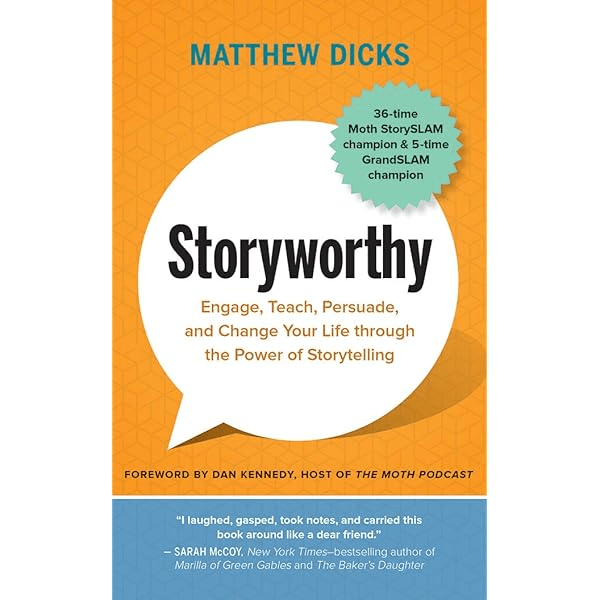
“Storyworthy” by Matthew Dicks is a guide to storytelling. I’ve read this book twice already and got many insights and valuable tips. A key takeaway is that anyone can tell good stories, a perspective I had never considered. A good story is authentic, vulnerable, and engaging while entertaining. Your story should include a moment that changed your life, positive or negative. Through storytelling, we have the potential to make this world a better place to be in. Now I practice “homework for life” (a daily story-capturing activity) every night. As I craft and share my stories with family, students, and others, my life feels richer and more exciting.
Personal Journey: The author begins with a personal anecdote, emphasizing that embracing vulnerability and taking on challenges can lead to new passions and discoveries. Every individual, he assures readers, has a story.
Defining a Story: A true story reflects personal change. It’s genuine, relatable, and consistent, whether shared with a large audience or over dinner.
Homework for Life: Documenting daily moments, even if they seem mundane, can offer a wealth of material for storytelling.
Crafting Techniques:
- Dreaming at the Pen: Freewriting can unveil potential story ideas.
- Five-Second Moments: A compelling story often involves a brief, significant moment. Unearthing this moment requires introspection and focus.
- Beginning and Ending: A story’s conclusion often mirrors its beginning, though with transformation. Beginnings should propel forward without setting undue expectations.
- Stakes: Captivating stories have stakes that keep audiences invested. Dicks proposes methods such as the “Elephant,” “Backpacks,” “Breadcrumbs,” “Hourglasses,” and “Crystal Balls” to maintain interest.
- Permissible Lies: Some alterations, like omission or compression, can simplify and enhance the narrative without compromising its truth.
- Visual Engagement: Every story scene should evoke vivid images, focusing on setting, action, and character.
- But and Therefore Principle: This approach, favouring conflict and consequence, keeps narratives engaging.
- Keep it Concise: Big events are more relatable when pared down. Moreover, brevity enhances impact.
- Evoking Emotion: Surprising the audience is the key to evoking tears. To make them laugh, employ strategies like juxtaposing unlikely elements or exaggerating scenarios.
- Finding Meaning: Reflect on personal experiences and motivations to discover the true essence of your story.
- Tenses: Present tense lends immediacy, while the past tense is suitable for backstories.
- Hero Stories: Celebrate small victories without overshadowing the journey or appearing boastful.
- Engaging the Audience: Avoid directly addressing the audience and ensure stories maintain an immersive experience.
- Choice of Words: Words should respect the audience. Avoid controversial topics and swear words. However, personal experiences are yours to share.
Performance Tips: Embrace mild nervousness as a sign of commitment. Prioritize eye contact, manage emotions, and be adept with microphones to ensure the story’s effectiveness.
Storytelling as a Superpower: Engaging storytelling is not just entertaining but also educational. It strengthens connections, imparts lessons effectively, and enriches life experiences. For educators, it’s a tool that enhances teaching, making it more impactful and memorable. Parents can utilize stories as valuable lessons that children cherish and revisit.
In essence, “Storyworthy” isn’t just a book about telling stories; it’s a testament to the transformative power of narratives in connecting, teaching, and enriching human experiences.
Discover more from Keunhyun (Keun) Park
Subscribe to get the latest posts sent to your email.
